Desert Safaris
What to Wear and Bring on a Dubai Desert Safari
Dress for sun, sand and a changing evening temperature, then pack the few essentials your chosen safari does not provide.
Desert Thrill Editorial · Published Jun 26, 2026 · Updated Sep 23, 2026 · 5 min read

Dress for the itinerary, not just the photograph
A desert safari may combine a vehicle ride, short walks on sand and time at a camp. Start with lightweight, breathable clothes you can move in. Choose a top that covers your shoulders and comfortable trousers or longer shorts that stay practical when stepping in and out of a vehicle. Loose layers can help in the sun, but avoid anything so flowing that it catches on a seat belt or activity equipment.

Choose secure, comfortable shoes for uneven sand. Closed shoes are useful for walking and optional activities; sandals can fill quickly with sand and may be unsuitable for an activity. Check the requirements shown for your selected tour and any add-on before leaving. You do not need specialist desert clothing for a standard sightseeing safari.
Outfit ideas for desert photo stops
Light neutrals: a cream or beige breathable shirt with comfortable trousers creates a soft, understated look against the dunes. Finish with secure, closed trainers that you are happy to get sandy.
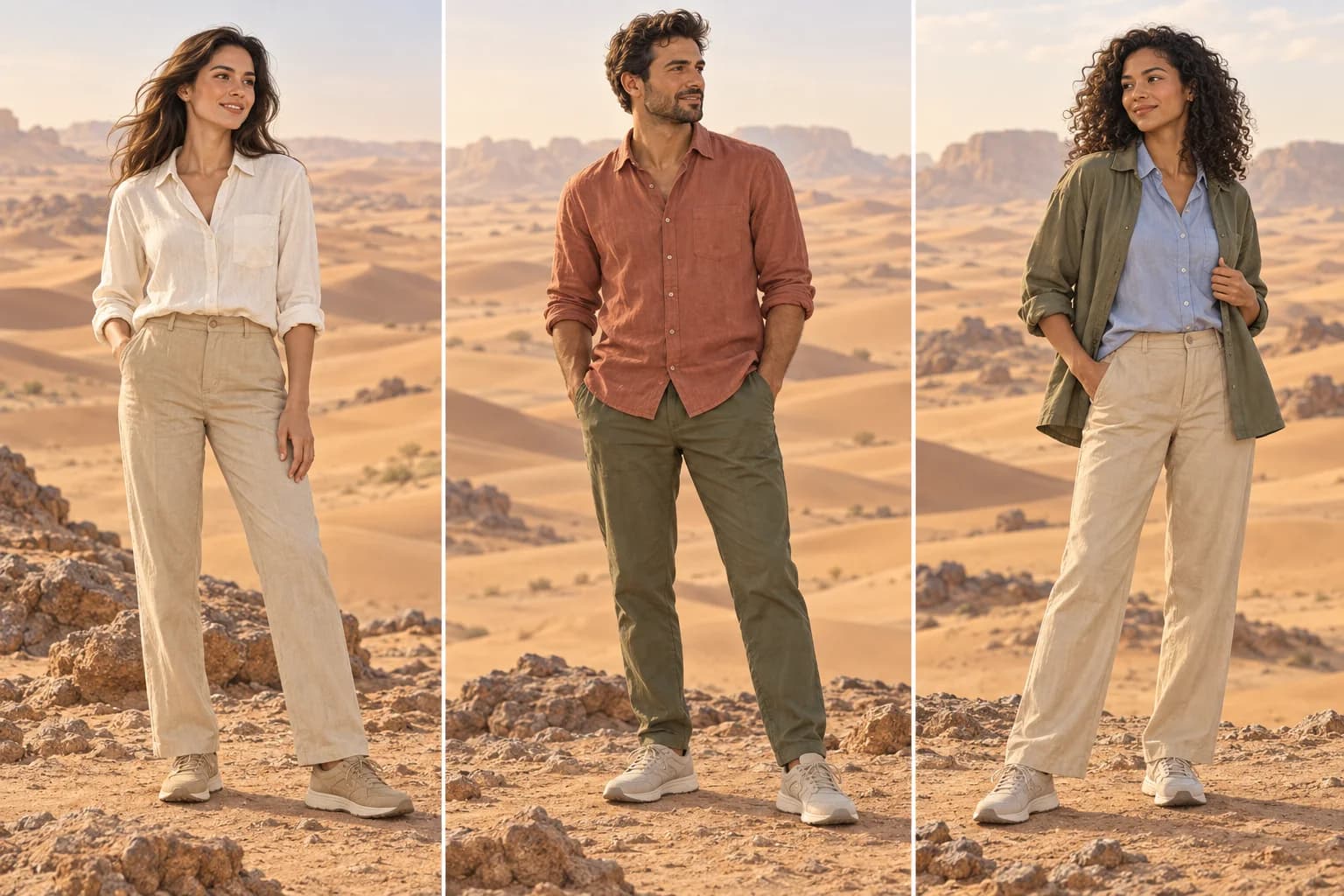
A little colour: try muted terracotta, olive or blue if you want your outfit to stand out from the sand. Comfortable separates make it easier to move between the vehicle and photo stops.
A cooler-evening layer: add a light jacket or overshirt to your daytime outfit. It is easy to remove for a photo and put back on when you want an extra layer.
These are styling ideas for stationary photo stops. For buggy or quad activities, follow the booked activity’s clothing and protective-equipment instructions; keep loose fabric secured.
Experience this yourself
Recommended tours for this guide
Ready to go — these tours bring this story to life.

Evening Desert Safari With BBQ Dinner

Morning Desert Safari

Premium Evening Desert Safari
Dress options for your photo stops
A patterned midi dress: a black-and-cream print adds contrast against the dunes, while a comfortable waist and a hem clear of the ground make it easier to walk. Pair it with closed trainers for moving between stops.
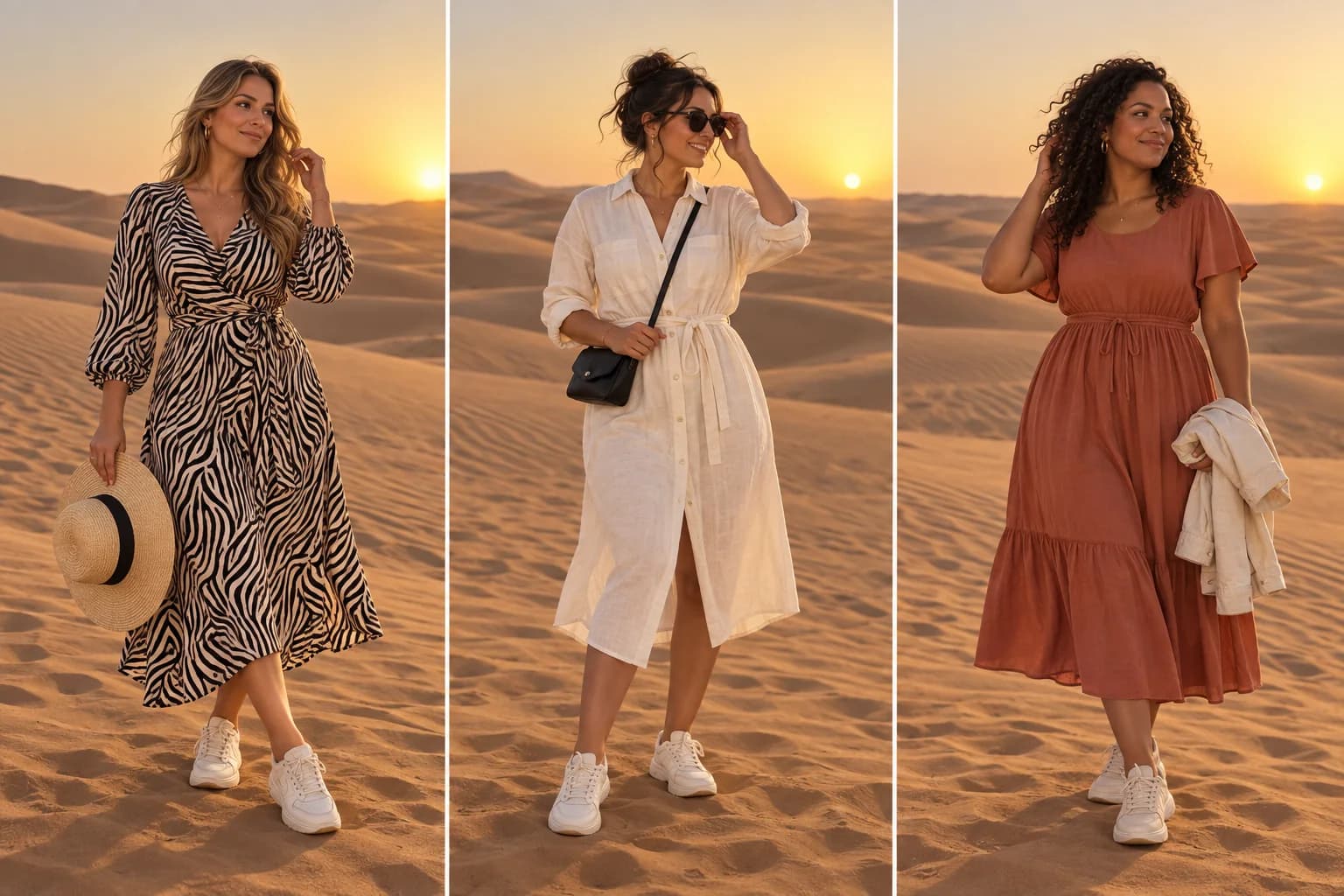
A light shirt dress: cream, sand or pale blue gives a relaxed look. Choose a length and fit that let you step into the vehicle comfortably, and bring a light layer for later.
A colourful midi dress: terracotta, muted coral or blue can add colour to sunset photographs. Simple shapes keep the outfit easy to wear; a sunhat is another option for stationary photos.
Keep longer hems clear of your feet on the sand. If your tour includes a buggy or quad ride, bring suitable activity clothing and change before riding where arrangements allow; confirm changing facilities in advance. Follow the activity-specific clothing and equipment instructions.
Plan for sun and a cooler finish
Pack sunscreen where you can easily reach it, and apply and reapply it according to its label. Bring a sun hat and sunglasses for exposed stops, and use shade when available. Sunglasses help with glare. For a buggy or quad ride, follow the operator’s instructions for protective eyewear and headgear.
Evening departures can finish after sunset. A light extra layer is useful if the air feels cooler or the vehicle air conditioning is strong. In hotter months, favour breathable fabrics and check the forecast close to departure rather than packing from a fixed seasonal rule.
Pack a small, secure bag
Keep your booking confirmation, charged phone, payment method and personal essentials together in a small bag that closes. Bring water for your journey; your selected product lists any included drinks, food and camp facilities.
A power bank, tissues and a reusable bag for sandy shoes can be handy. Travel light so your hands are free during transfers and short walks.
Make the most of your photo stops
Keep your phone or camera within easy reach for the stop, then zip it away before the vehicle moves. Use a clean lens cloth to remove dust before shooting, and avoid changing camera lenses in blowing sand.
Secure your hat if the wind picks up. Try a simple pose with the dunes behind you and leave room around your outfit in the frame so the colours and shape are visible. Ask before taking close-up photographs of other guests or staff.
Take photographs while stopped and follow your guide’s directions about where to stand. A photo stop is the time to arrange your outfit; secure loose items again before returning to an activity.
Check the activity and pickup details
A safari with a buggy or quad component has different equipment and participation rules from a passenger safari. Read the specific product and selected option for protective gear, footwear and participation requirements before booking. Our sandboarding and dune buggy guide helps you compare activities.

Before the day, recheck the confirmed pickup point and time, duration, selected inclusions and any operator message. For a short reminder you can print, use the desert safari packing checklist.
Keep the essentials handy: open the packing card (PNG) and save it to your phone before your trip.
Frequently asked questions
- Do I need special shoes for a Dubai desert safari?
- Comfortable, secure shoes are a practical choice for sand and vehicle stops. If you booked a buggy, quad or another add-on, follow that activity's specific footwear instructions.
- Are sunglasses enough for a buggy or quad ride?
- No. Sunglasses reduce glare but are not a substitute for activity-specific protective eyewear. Follow the selected operator's safety-gear instructions.
- Will my safari include water, food and shows?
- Inclusions differ by product and booking option. Check the current listing and your confirmation for drinks, meals and entertainment before you travel.
